The short version
- The Lexus NX 350h and Toyota RAV4 share a naturally aspirated 2.5‑liter hybrid four-cylinder.
- The Lexus GX and LX use the same twin-turbo 3.4‑liter V6 found in the Toyota Tundra and Sequoia.
- Lexus’s discontinued LFA used a Yamaha-developed 4.8‑liter V10; 500 were built.
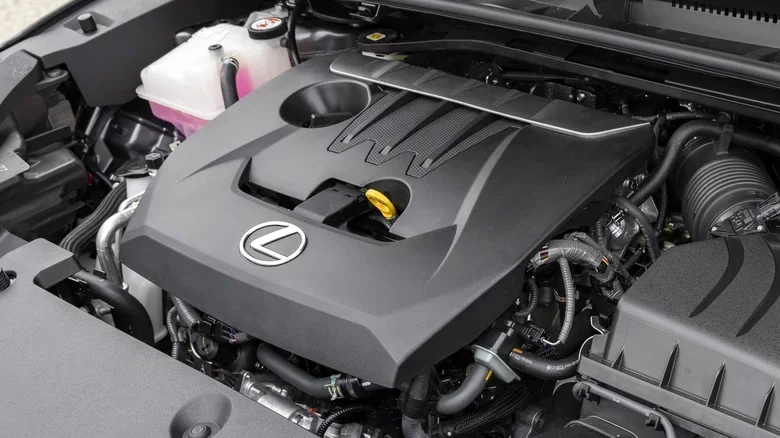
Many Lexus models use engines also found in Toyota vehicles, but Lexus-specific powertrains have served some of the brand’s performance models. Shared engines can have different ECU calibrations, so output varies by model.
The Lexus NX 350h and Toyota RAV4 share a naturally aspirated 2.5‑liter hybrid four-cylinder. The Lexus TX 350 and Toyota Grand Highlander use a turbocharged 2.4‑liter four-cylinder, while the Lexus GX and LX share a twin-turbo 3.4‑liter V6 with the Toyota Tundra and Sequoia.
Lexus also had its own naturally aspirated 5.0‑liter V8, used in the IS F, RC F, GS F and LC 500. The discontinued LFA used a 4.8‑liter V10 developed with Yamaha. Each of the 500 cars received an engine built and approved by one engineer.
Toyota’s turbocharged 1.6‑liter three-cylinder also powers the Lexus LBX Morizo RR, a model not sold in North America.
How this story was made
Written by the Tach Wire desk from the reporting below, checked against each source and for overlap with their text. Photo: Photo: Carscoops.
0 comments
Comments stay in this browser. They are not sent to the newsroom.