The short version
- VW built a 5.0‑liter W10 by combining two 2.5‑liter VR5 five-cylinders, making 480 hp and 437 lb-ft.
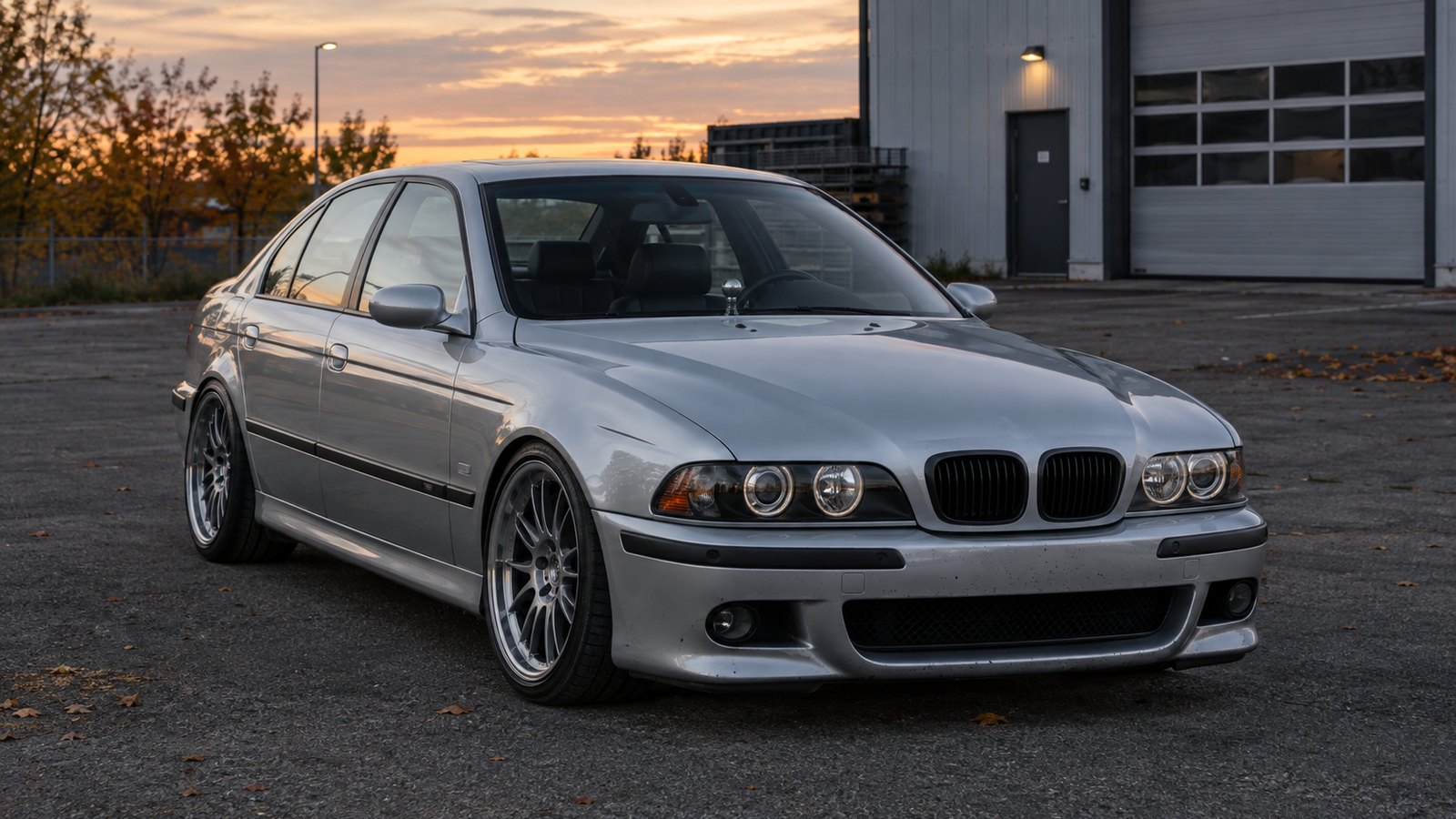
- The engine went into a 1999 E39 BMW M5; only three W10s were built and this is the only road-legal car.
- Broad Arrow Auctions sells it October 9, estimating €250,000–€350,000 ($285,000–$399,000).
A 1999 BMW M5 that Volkswagen used as a secret test bed for its W10 engine is heading to auction on October 9. Broad Arrow Auctions expects it to bring between €250,000 and €350,000, or roughly $285,000 to $399,000 at current exchange rates.
The car looks like any other E39 M5, which normally uses BMW's S62 V8. Under the hood, though, sits a 5.0‑liter naturally aspirated W10 that Volkswagen created by joining two of its 2.5‑liter VR5 five-cylinder engines.
What the W10 makes
In this application the W10 produces 480 hp and 437 lb-ft (592 Nm) of torque. That was a strong figure for the late 1990s, and it goes to the rear wheels through a six-speed manual transmission.
Volkswagen bought the M5 in 1999 and used it to develop a sedan that could rival BMW's own. The project was driven by Ferdinand Piëch, who wanted something more unusual than an off-the-shelf V8. VW tested the prototype extensively, and Piëch reportedly used it as his personal car at one point.
The W10 never reached production. Only three units are thought to have been built, and this is the only one fitted to a road-legal car. VW is said to have spent roughly €2 million ($2.27 million) on the project.
Why it matters beyond this car
The W10 was a proving ground for Volkswagen's later W-family engines. The same idea of combining narrow-angle VR engines led to the W12, built from two VR6 six-cylinders, and the W16 used in the Bugatti Veyron and Chiron, which was based on the VR8.
That lineage is a big part of the appeal here. This is not a factory M5 with a swapped engine; it is a Volkswagen engineering mule that happens to wear BMW bodywork.
Condition and unknowns
Mileage is unknown. The original gauge cluster and odometer have been replaced, so there is no reliable reading. Photos show scuffs, scrapes, and stone chips on the front end, suggesting the car was driven hard during its development life.
The auction house has not published a full service history. Buyers should expect a prototype with limited documentation, not a concours E39.
Broad Arrow's estimate range spans about $114,000, which reflects how unusual the car is. A standard E39 M5 in similar cosmetic condition would typically trade for a fraction of the lower estimate, but no standard M5 has a W10 or a direct tie to Piëch's engine program.
The sale is set for October 9. Whoever buys it will own the only road-legal W10-powered car Volkswagen is known to have built.
How it compares
How this story was made
Written by the Tach Wire desk from the reporting below, checked against each source and for overlap with their text. Cover: AI-generated illustration.
0 comments
Comments stay in this browser. They are not sent to the newsroom.